- Japan is one of the world's largest importers of hay (HS 1214) and cereal straw (HS 1213).
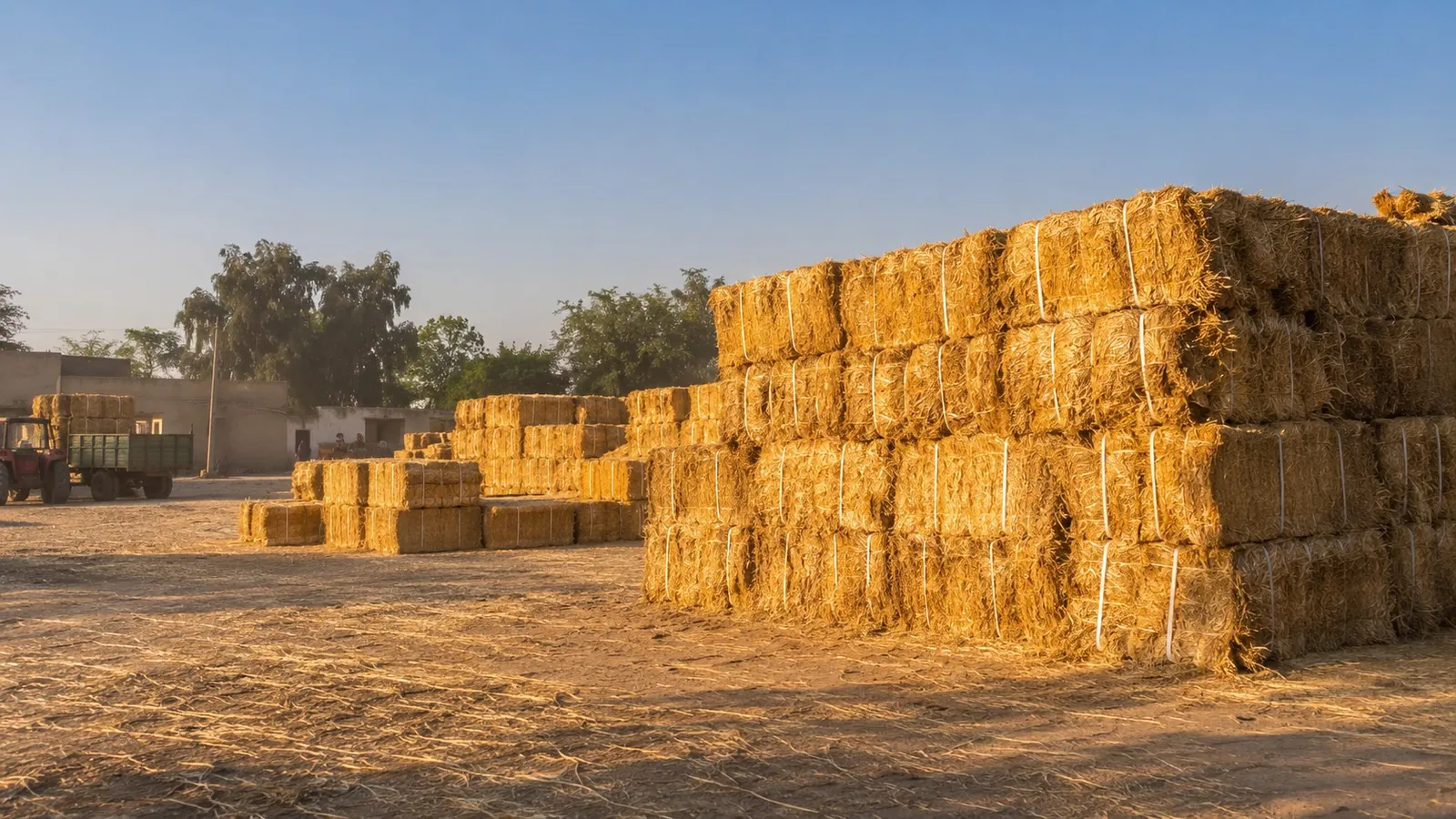
- Pakistan wheat straw: max 12% moisture, min 3.5% protein, ADF about 40%.
- Rhodes grass hay: 10–14% moisture, 9–12% crude protein, fine cut.
- Straw and hay imports into Japan face plant and animal quarantine. Confirm current rules with MAFF before ordering.
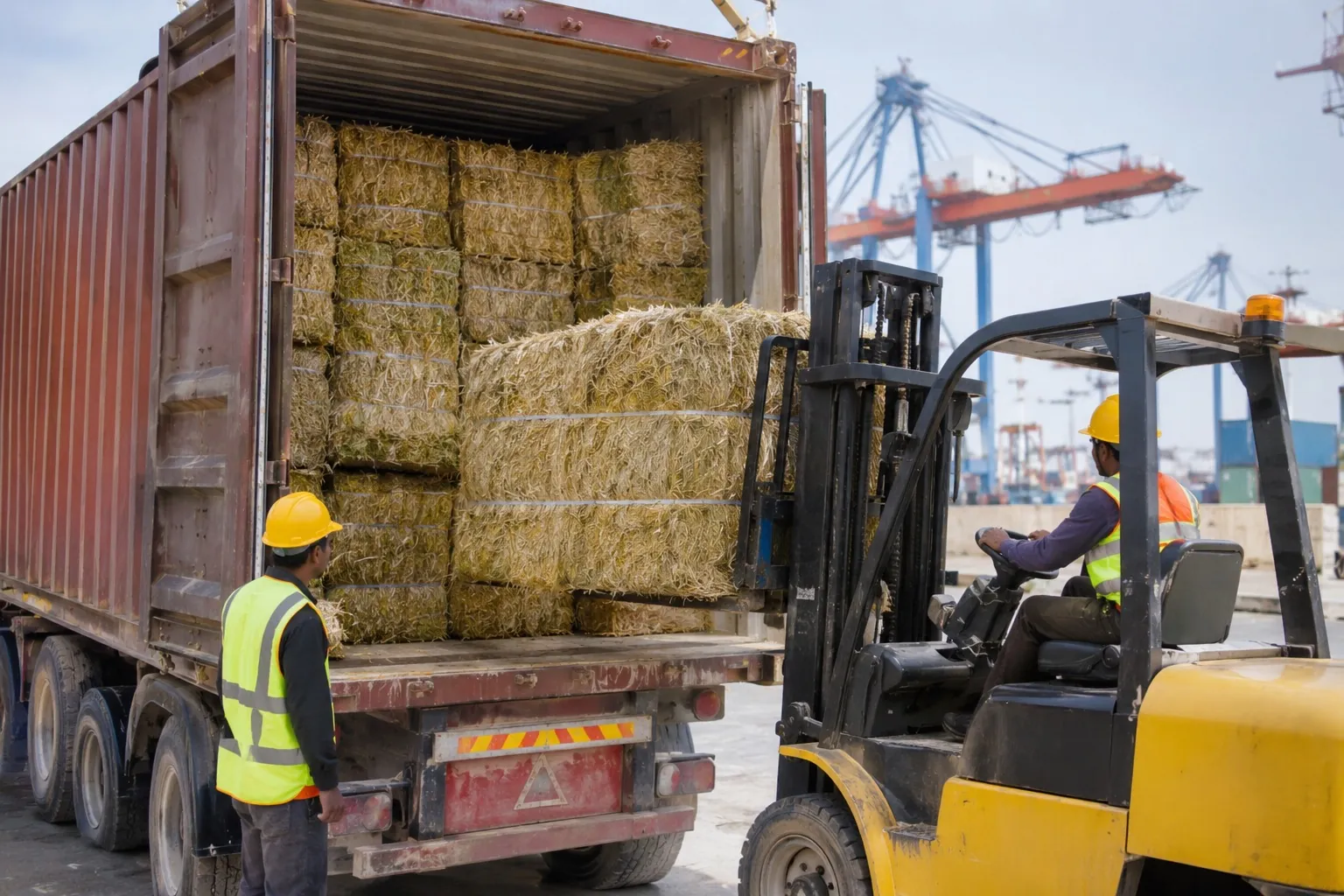
- Shipped in containers from Karachi; bale size and density agreed per order.
Why Japanese farms import straw and grass hay
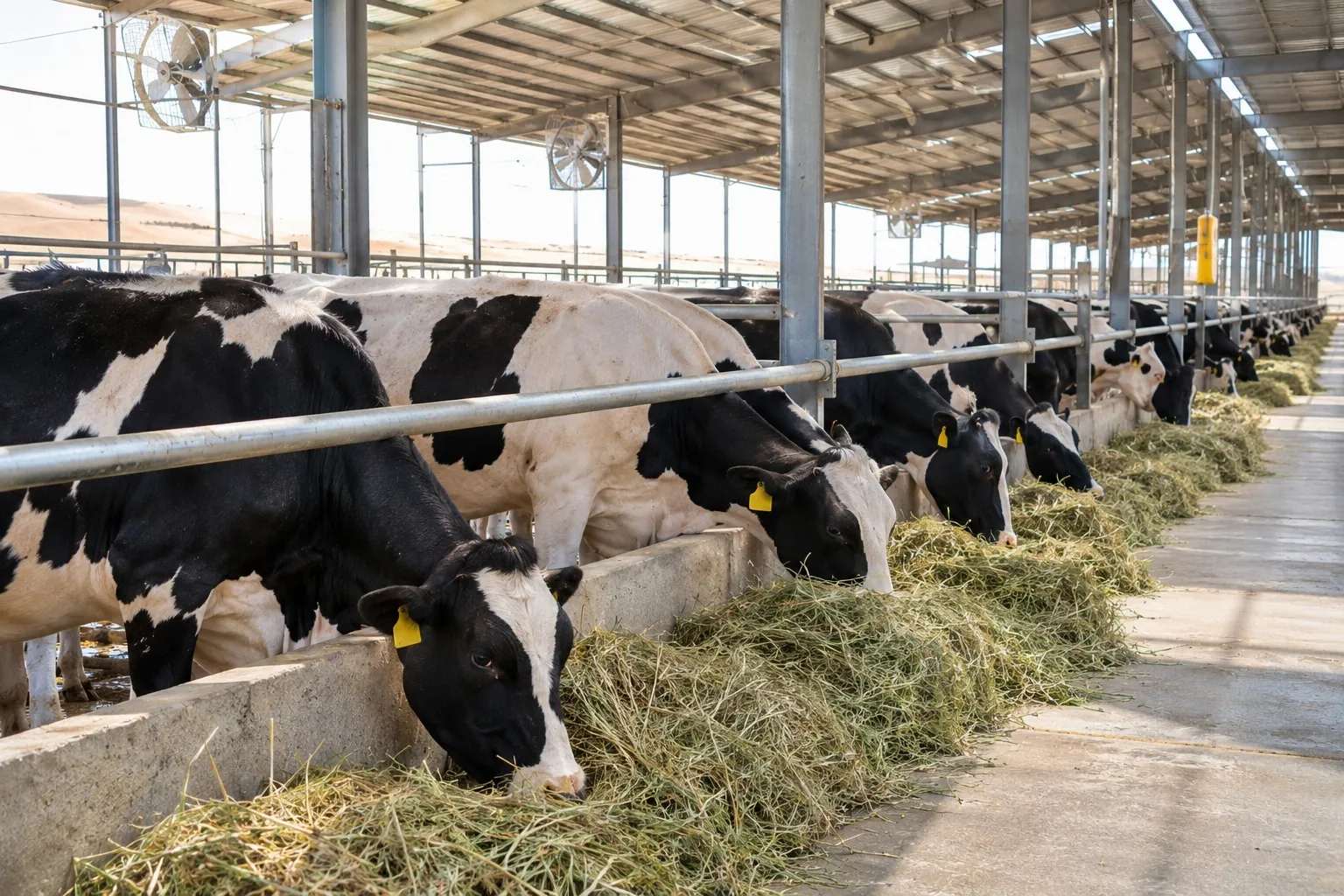
Japan has limited land for forage crops, so its dairy herds and Wagyu and other beef cattle rely heavily on imported roughage. Trade data consistently ranks Japan among the top importers of both cereal straw (HS 1213) and hay and other forage (HS 1214). Buyers look for clean, consistent bales with predictable fibre and moisture, because rations in intensive dairy and beef systems are formulated tightly.
Which product fits which ration
Wheat straw is used as low-cost effective fibre. In beef fattening, straw helps keep cattle on feed and supports rumen health on high-concentrate diets. In dairy, it is used in dry-cow and heifer rations. Our Punjab wheat straw tests at a maximum of 12% moisture, a minimum of 3.5% crude protein and around 40% ADF.
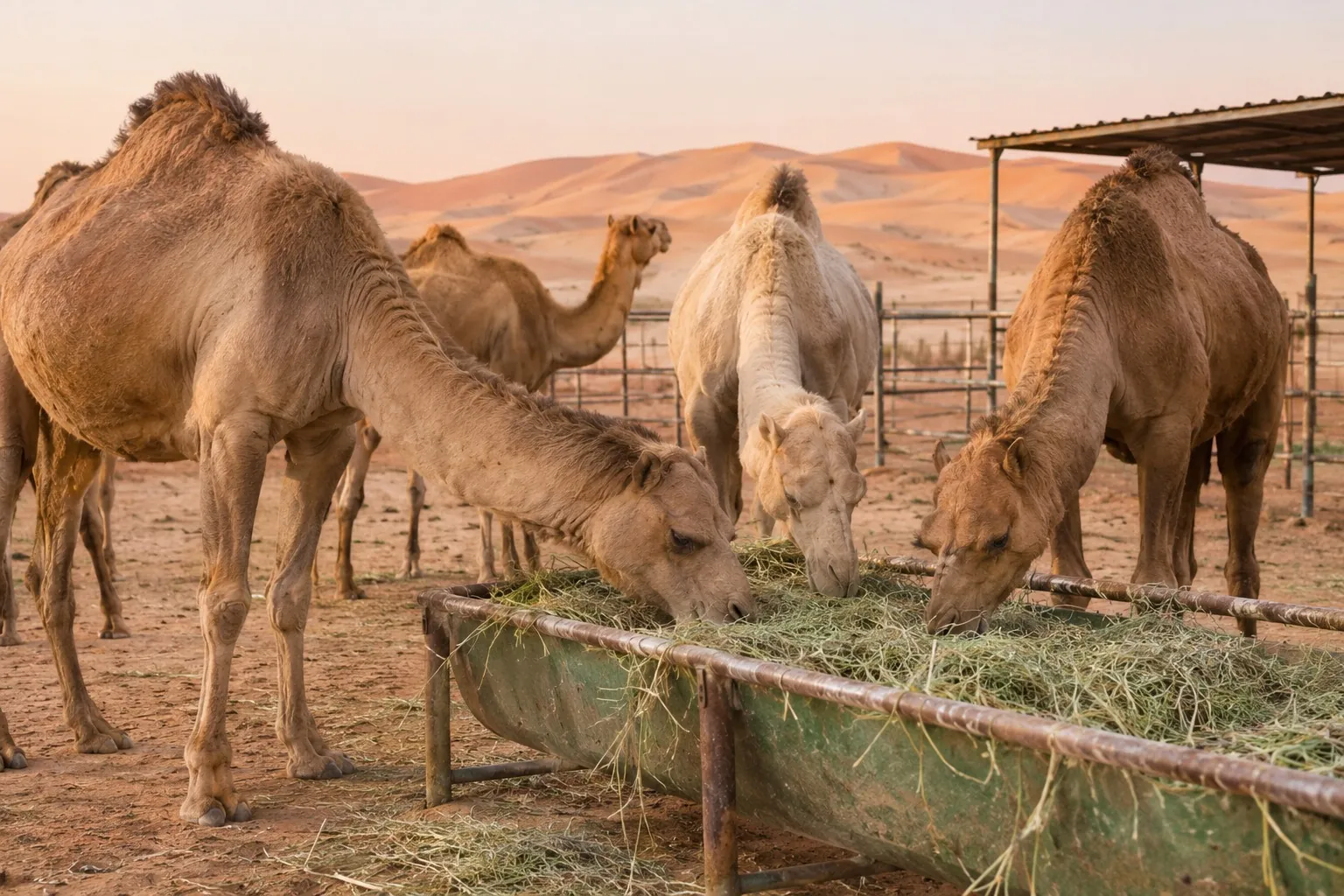
Rhodes grass hay (Chloris gayana) is a fine-stemmed tropical grass hay with 9–12% crude protein. Japanese buyers often compare it with Sudan grass, Timothy and Klein grass. It suits lactating cows, calves and heifers where palatability matters.
Quarantine and documents
Japan applies strict plant quarantine and animal health controls to imported straw and forage, and the requirements can differ by country of origin and by product. Some origins require approved heat treatment or other measures before export. Before you place an order, ask your import agent or the Ministry of Agriculture, Forestry and Fisheries (MAFF) plant and animal quarantine services to confirm what applies to Pakistani straw and hay.
With every shipment we supply:
- Phytosanitary certificate issued in Pakistan
- Certificate of origin
- SGS or Bureau Veritas inspection report
- Commercial invoice, packing list and bill of lading
If your permit needs an additional treatment, test or declaration, tell us at the quote stage so we can plan it into the lot.
Quality points Japanese buyers check
- Moisture: low and even across the lot to prevent mould on a long voyage
- Foreign matter: no soil, plastic, stones or weeds
- Colour and smell: bright, clean and free of mustiness
- Bale density and size: to suit your warehouse handling and container fill
- Consistency: the same quality from lot to lot so rations stay stable
Shipping from Karachi to Japan
Bales are pressed at high density and loaded into containers at Karachi for ports such as Tokyo, Yokohama, Nagoya, Kobe and Hakata. We quote CFR or CIF to your port. Ask for a sample bale or lab report from the current lot before committing to regular supply.
This guide is general information. Import rules change; confirm current requirements with the authority or customs broker named above before you order.