- Wheat straw: about 3.5% crude protein, high fibre, lowest cost.
- Rhodes grass hay: 9–12% crude protein, palatable grass hay.
- Alfalfa: legume hay with much higher protein, highest cost.
- Most dairies mix forages to balance fibre, protein and cost.
- Ask a nutritionist to set the ration for your animals.
The short answer
Buy wheat straw when you need cheap fibre or bedding, Rhodes grass hay when you need a palatable mid-protein grass hay, and alfalfa when you need a protein boost for high-yield dairy. Many farms buy two or three and mix them.
| Wheat straw | Rhodes grass hay | Alfalfa | |
|---|---|---|---|
| Crude protein | About 3.5% | 9–12% | Often 16%+ |
| Main role | Fibre, rumen health, bedding | Palatable grass forage | Protein and energy |
| Best for | Beef, dry cows, goats, bedding | Dairy, horses, camels, goats | High-yield dairy |
| Relative cost | Lowest | Middle | Highest |
| HS code | 1213 | 1214.90 | 1214.10 (meal/pellets) or 1214.90 |
Dairy cows
High-yield cows need protein and energy, so alfalfa and Rhodes grass usually form the forage base, with a little wheat straw to keep the rumen working and control intake. Dry cows and heifers can take more straw.
Beef cattle and feedlots
Feedlots feeding high-grain diets use straw as cheap effective fibre. Rhodes grass helps with palatability for newly arrived or young stock.
Horses
Fine, low-dust Rhodes grass hay is a popular main grass hay for stables in the Gulf. Straw is mainly bedding, with small amounts sometimes fed to good-doers.
Camels, sheep and goats
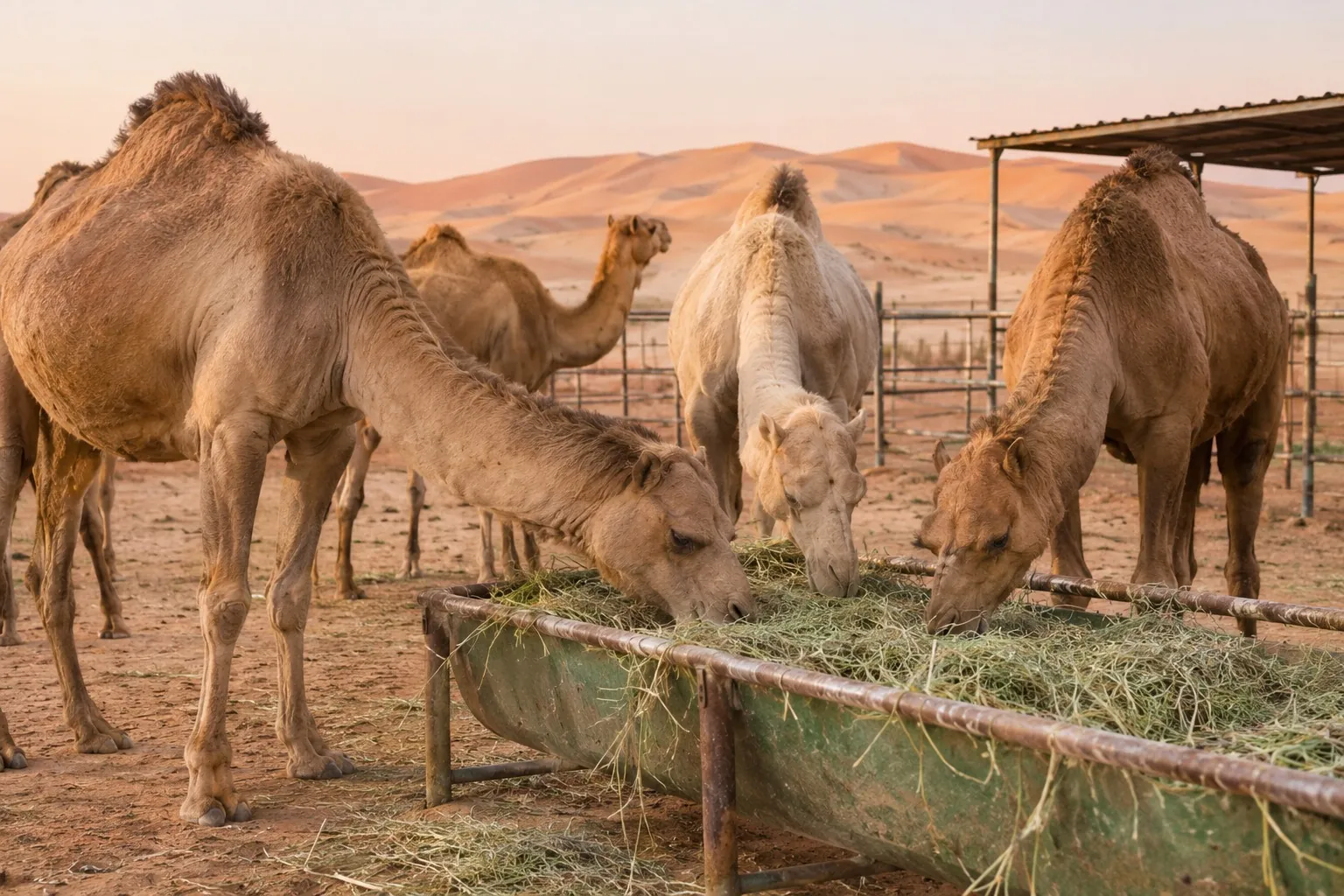
Camels and goats eat Rhodes grass readily. Straw stretches the ration and lowers cost; milking goats may need alfalfa for protein.
This guide is general information. Import rules change; confirm current requirements with the authority or customs broker named above before you order.